What to Expect From a Dog Echocardiogram in Taylorville
What to Expect From a Dog Echocardiogram in Taylorville
If you have been told your dog needs an echocardiogram, you may feel anxious or uncertain about what the procedure involves and how it can help your companion’s heart health. A dog echocardiogram is a specialized ultrasound that gives veterinarians a detailed look at your dog’s heart in real time, allowing for accurate diagnosis and tailored treatment plans. At Countryside Veterinary Services in Taylorville, IL, our team of veterinarians understands that your dog is a beloved part of your family. We are committed to providing advanced heart diagnostics and compassionate care for dogs from Taylorville and surrounding communities. In this blog, we will explain what a dog echocardiogram is, when it is recommended, what to expect during the procedure, and how our clinic supports you and your dog every step of the way. If you are seeking more details about diagnostic imaging, you can explore our dedicated echocardiogram services to learn how we use specialized heart ultrasounds for pets.
Recognizing Signs Your Dog May Need an Echocardiogram
Heart disease can be subtle, especially in its early stages. As a dog owner, you play a crucial role in observing changes that could signal a problem. Key symptoms indicating a potential heart issue in dogs include persistent coughing, especially at night or after exercise, difficulty breathing, rapid or labored breathing while resting, and a noticeable decrease in activity or stamina. Some dogs may faint or collapse during excitement or physical activity, while others become lethargic, lose their appetite, or display a pot-bellied appearance due to fluid accumulation. If you notice your dog struggling to keep up on walks, appearing winded after minimal exertion, or showing signs of weakness, these could be early warnings of an underlying heart condition that may warrant a dog echocardiogram.
Your veterinarian might also detect a heart murmur, irregular heartbeat, or abnormal heart sounds during a routine wellness examination. In such cases, a dog echocardiogram provides essential information for determining the cause and best course of action. Early intervention is often the key to managing heart disease and maximizing your dog’s quality of life.
Understanding Why Dogs Need Echocardiograms
A dog echocardiogram is not a routine screening tool; it is recommended when specific concerns arise. The most common reasons veterinarians suggest this test include diagnosing or monitoring heart murmurs, investigating symptoms of heart failure, evaluating congenital heart defects, and tracking progression of known heart disease. Breeds predisposed to cardiac issues, such as Cavalier King Charles Spaniels, Boxers, and Doberman Pinschers, are more likely to require cardiac evaluation as part of their ongoing health management. However, heart disease can affect dogs of any breed, age, or size.
Heart disease in dogs may result from genetics, chronic valve degeneration (common in small breeds), heart muscle disorders, or acquired problems such as heartworm infection. Environmental factors, age, and concurrent illnesses can also contribute to cardiac problems. A dog echocardiogram offers a safe, non-invasive way for your veterinary team to assess heart structure and function, measure chamber sizes, evaluate heart valves, and observe blood flow patterns in real time. This detailed information helps differentiate between types of heart disease, guides medication choices, and determines if surgical intervention might be beneficial.
For owners of livestock or horses, heart ultrasound technology is also used in large animal medicine, particularly for valuable breeding animals or horses showing poor performance. However, the focus of this article is canine heart health, and our veterinary team at Countryside Veterinary Services tailors the echocardiogram process specifically for your dog’s unique needs.
What Happens During a Dog Echocardiogram at Countryside Veterinary Services
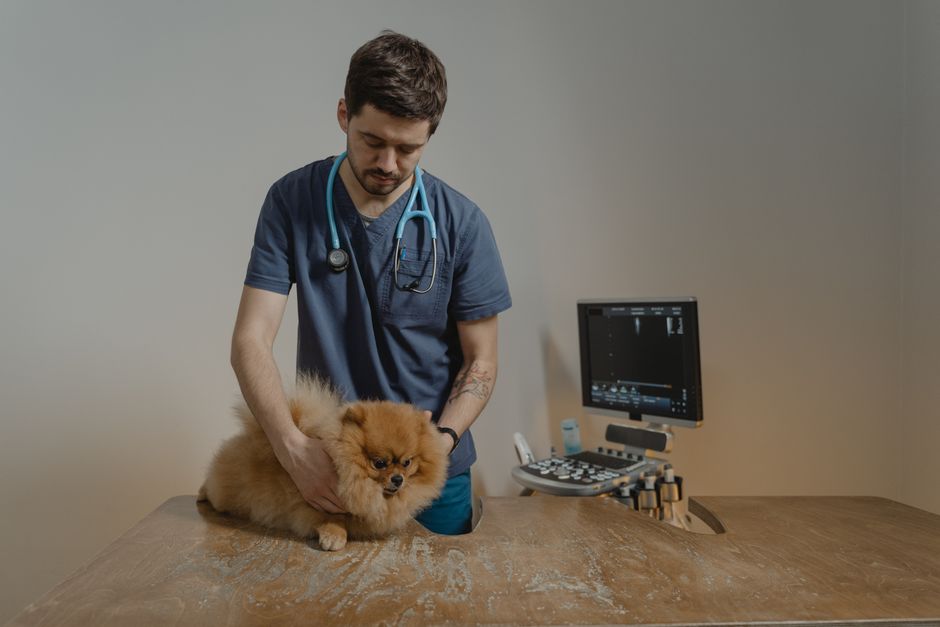
When your veterinarian recommends a dog echocardiogram, you can expect a thorough, gentle, and stress-minimized experience at 201 South Water Street, Taylorville, IL 62568. Our veterinary professionals will review your dog’s health history and explain each step of the process. Most dogs do not require sedation for this procedure. Your dog will be gently positioned on a padded table, often lying on their side, while our veterinarian or skilled technician uses a specialized probe and ultrasound gel to capture images of the heart.
The procedure is completely painless and usually takes about 30 to 60 minutes. Dogs typically tolerate the process well, especially with reassurance and gentle handling. Our team understands that some dogs may be nervous, so we use calming techniques and allow you to remain present when appropriate. Throughout the echocardiogram, we observe heart muscle contractions, measure the heart’s size and wall thickness, assess the valves, and evaluate blood flow using Doppler imaging. These details help us detect issues such as valve leaks, heart enlargement, abnormal rhythms, or congenital defects.
Once the images are collected, our veterinarians review the results and discuss the findings with you in clear, understandable language. If additional diagnostics are needed, such as chest X-rays or other veterinary ultrasound services, we will explain why they are recommended and how they add to your dog’s overall cardiac evaluation.
Interpreting the Results: What a Dog Echocardiogram Can Reveal
A dog echocardiogram provides invaluable insights into the health of your dog’s heart. The results can confirm or rule out heart disease, determine the severity of any detected abnormality, and guide specific treatment recommendations. For example, if a heart murmur is due to a leaky valve, the echocardiogram will show how much blood is leaking and whether it is causing the heart to work harder. If there is evidence of congestive heart failure, the test can identify fluid accumulation and help tailor medication to reduce your dog’s symptoms.
Other conditions that a dog echocardiogram can help diagnose include heart muscle disorders (cardiomyopathy), tumors affecting the heart, pericardial effusion (fluid around the heart), and congenital defects present from birth. In some cases, the results may show that the heart is functioning normally, providing peace of mind for concerned owners and allowing your dog to continue their daily activities without unnecessary restrictions.
Our veterinary team uses this information to develop a personalized care plan for your dog. Treatment options might involve medications to manage blood pressure or heart rate, dietary recommendations, exercise adjustments, or in rare cases, referral to a veterinary cardiologist for advanced intervention. We will discuss all findings with you thoroughly, answer your questions, and ensure you feel supported throughout the process.
Supporting Your Dog’s Heart Health at Home
While some types of heart disease are not preventable, you can take proactive steps to support your dog’s overall cardiovascular health. Feeding a balanced diet recommended by your veterinarian, keeping your dog at a healthy weight, and providing regular exercise appropriate for their age and health status are important foundations. For breeds prone to heart disease, routine check-ups allow for early detection and intervention.
If your dog has been diagnosed with heart disease, carefully follow your veterinarian’s instructions regarding medication, activity restrictions, and follow-up appointments. Monitor your dog for changes in breathing, coughing, appetite, or energy levels, and report any concerns promptly. In some cases, repeat echocardiograms are advised to monitor disease progression and adjust treatment as needed.
For owners of livestock or horses, similar principles apply: regular veterinary evaluations, attention to body condition score, and prompt attention to changes in performance or behavior are essential for maintaining the health of all animals under your care.
When to Contact Your Veterinarian About Your Dog’s Heart
It is important to reach out to your veterinary team if you notice any signs of heart disease in your dog. Worsening cough, difficulty breathing, fainting, exercise intolerance, or sudden changes in behavior should always prompt a call to your veterinarian. Early intervention improves outcomes and can help your dog remain comfortable and active for as long as possible.
If your veterinarian recommends a dog echocardiogram, it is because this test is the gold standard for evaluating heart function and guiding treatment decisions. Do not delay in scheduling this important diagnostic procedure, especially if your dog is already showing symptoms. For urgent situations during regular business hours, Countryside Veterinary Services offers emergency veterinary care for dogs experiencing distress or sudden health changes.
Your Trusted Local Resource for Dog Echocardiograms in Taylorville
At Countryside Veterinary Services, our team of veterinarians is dedicated to delivering advanced heart diagnostics and personalized care for dogs in Taylorville and surrounding communities. Whether your dog needs a routine heart check or has been referred for a dog echocardiogram, you can trust our clinic at 201 South Water Street, Taylorville, IL 62568 to provide expertise and compassion at every stage. We work closely with you to ensure you understand your dog’s diagnosis, treatment options, and how to support their health at home.
If you are searching for a veterinarian near me who offers comprehensive cardiac evaluations, our veterinary professionals are here to help. To schedule an appointment for your dog’s echocardiogram or to discuss any heart-related concerns, call (770) 788-7387 today. You can also learn more about our echocardiogram services and other diagnostic capabilities on our website. Your dog’s heart health is too important to leave to chance; trust the local experts who care for your entire family, whether they have paws, hooves, or feathers.
This post is for informational purposes only and does not replace professional veterinary care. Always consult your veterinarian for specific advice regarding your animal’s health.